
The Night the Medal Was Born
Elena Navarro|
Columnist
The date was November 27, 1830. The place was the chapel of the Daughters of Charity at 140 Rue du Bac, Paris. The time was approximately eleven-thirty at night.
Catherine Labouré, a twenty-four-year-old novice who had entered the community only five months earlier, was awakened by what she later described as a child’s voice calling her name. She followed the light to the chapel, where she found candles burning as if for Midnight Mass. She knelt at the altar rail and waited.
Then the Blessed Virgin Mary appeared.
Catherine described what she saw in careful, specific terms. A woman dressed in white silk, wearing a white veil that fell to her feet. She sat in the director’s chair beside the altar. She spoke. She told Catherine about the trials that would come to France, to the Church, to the world. She spoke of suffering and of the consolation that would be available to those who sought it.
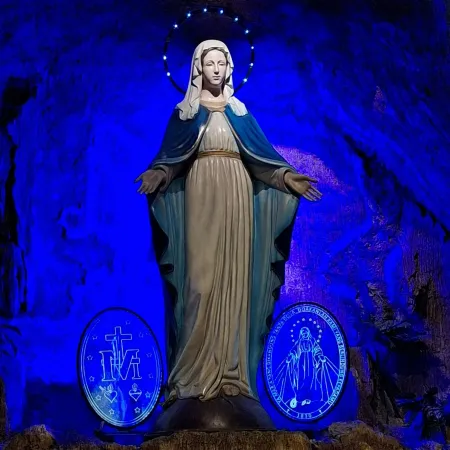
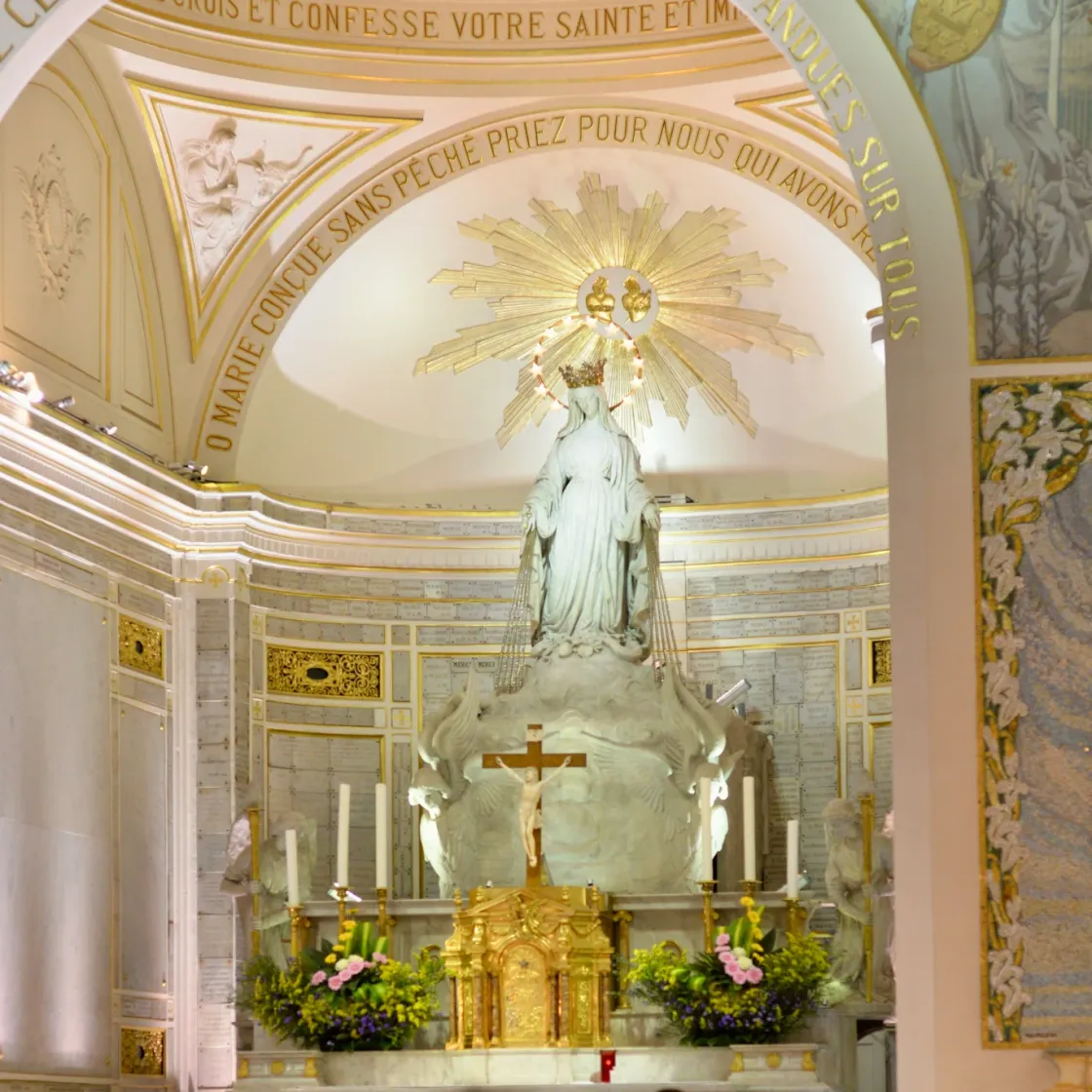
Then she showed Catherine an image: herself standing on a globe, rays of light streaming from rings on her fingers, surrounded by the words O Mary, conceived without sin, pray for us who have recourse to thee.
The image rotated. On the reverse: a large M surmounted by a cross, beneath it the Sacred Heart of Jesus crowned with thorns and the Immaculate Heart of Mary pierced by a sword. Twelve stars encircled the whole.
The voice said: Have a medal struck after this model. All who wear it will receive great graces; they should wear it around the neck. Graces will abound for persons who wear it with confidence.
Then the vision ended.
Catherine told no one except her confessor, Father Jean-Marie Aladel. He was skeptical. He waited. Catherine received two more visions in 1830, each reinforcing the request. Father Aladel eventually brought the matter to the Archbishop of Paris, who authorized the medal’s production in 1832.
The first fifteen hundred medals were distributed in Paris. Within months, accounts of graces and healings began to circulate. The demand became impossible to meet. By the end of 1836, over two million medals had been produced. By 1842, the number was in the hundreds of millions.
Catherine Labouré continued her life as a Daughter of Charity, caring for the elderly at a hospice in Enghien-sur-Marne. She told no one of her role in the medal’s origin. Her fellow sisters did not know. The public did not know. For forty-six years, she kept the secret.
In 1876, sensing that she was dying, Catherine finally told her superior, Sister Dufès, the full story. She died on December 31 of that year, at the age of seventy.
The Church began the process of her beatification in 1933. She was canonized by Pope Pius XII on July 27, 1947.
Her body, incorrupt, rests in the chapel at 140 Rue du Bac — the same chapel where, on a November night in 1830, she knelt at the altar rail and waited, and heard a voice call her name.
The chapel is open to visitors. Millions come each year. They come from every country, speaking every language, wearing medals that trace their origin to that single night.
Most of them do not know the details of what happened there. They know only that something began in this place — something that has accompanied people through illness and war and grief and ordinary life for nearly two centuries.
That is enough. That is, perhaps, exactly what was intended.