The Same Medal, Different Hands
Rosario Delgado|
Secondary School Teacher, Seville
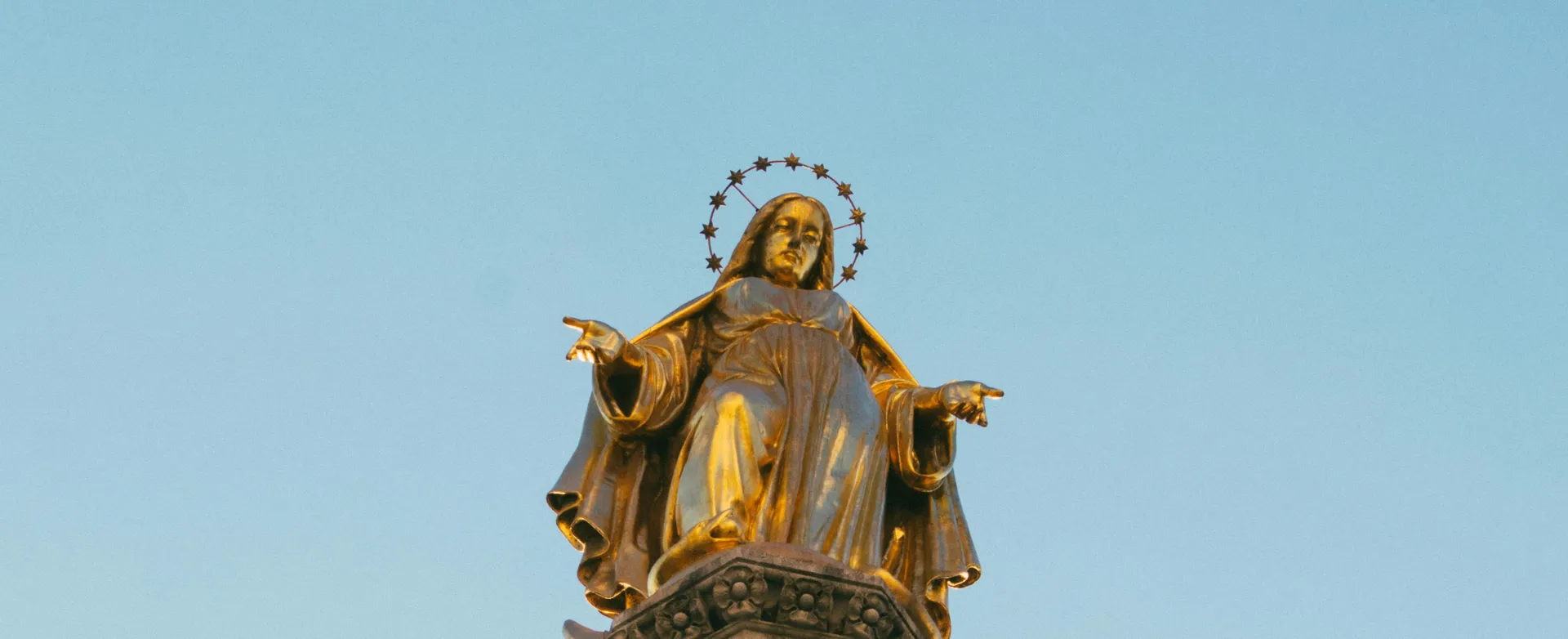
My father was not a demonstrative man. He was an engineer — precise, practical, not given to sentiment. He went to Mass every Sunday, said his prayers, wore a Miraculous Medal that his own father had given him. He did not talk about his faith. He simply had it, the way he had his hands.
In 1998, my father was in the hospital waiting room while my mother was in surgery — a serious operation, though she recovered well. He sat there for six hours. At some point, a man sat down beside him. They began to talk.
The man’s wife was also in surgery. The prognosis was not good. He was frightened in a way that my father recognized — the particular fear of someone who does not know how to be afraid, who has no practice with it.
My father took off his medal and gave it to him.
He came home without it. When my mother asked where it was, he told her. She said nothing. She understood.
My father died in 2011. He had worn a different medal in his final years — one my mother had given him to replace the one he had given away. He died with it on.
In 2019, a woman came to our door. She was perhaps forty, and she introduced herself as the daughter of the man my father had met in the waiting room in 1998. Her mother had died in surgery that day. Her father had worn my father’s medal for the rest of his life. He had died the previous year.
Before he died, he had told her the story. He had asked her to find the family of the man who had given him the medal and return it.
She had spent two years finding us.
She handed me the medal. It was the same one — I recognized the slight irregularity on the back, a small mark my grandfather had made with a file decades ago to distinguish it from others. I held it and could not speak for a moment.
She told me what her father had said about that day in the waiting room. He had been in despair — not only about his wife, but about everything. He had been, in his words, at the end of something. The conversation with my father, and the medal, had not saved his wife. But they had saved him, in some way he could not fully articulate. He had worn the medal every day for twenty-one years.
She said: He wanted your family to know that it mattered. That your father’s kindness mattered.
I wear the medal now. My father’s medal, which was my grandfather’s medal, which spent twenty-one years around the neck of a man my father met once in a waiting room.
I think about the chain of it — not the metal chain, but the human one. My grandfather to my father. My father to a stranger. The stranger’s daughter back to me. Each link made without planning, without knowing what would come next.
This is how grace moves, I think. Not in straight lines. In the hands of people who give things away without knowing where they will go.